


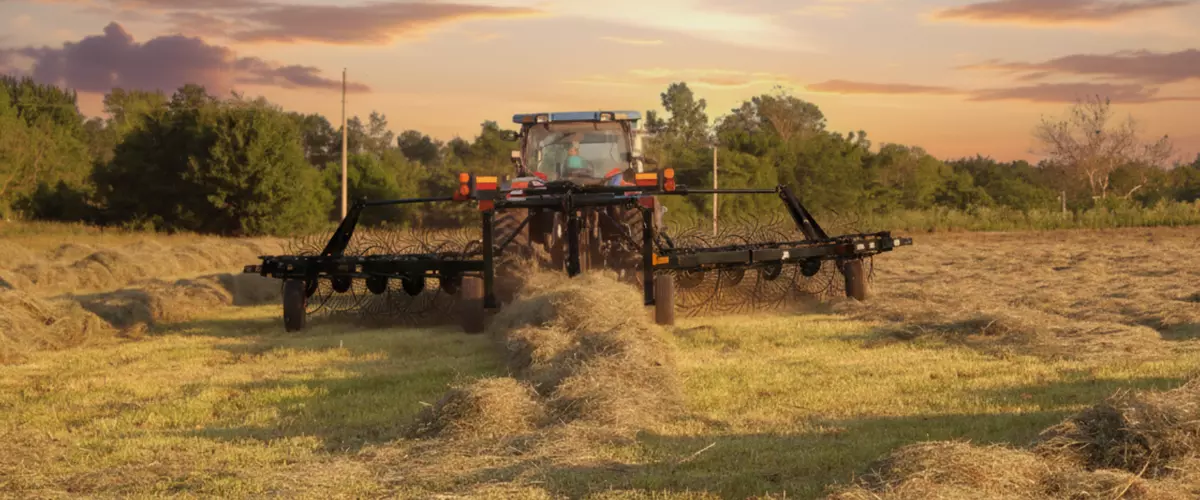





Most farmers should wait 4–24 hours after mowing before raking hay, depending on crop type, weather conditions, and moisture levels.
The goal of raking is to allow hay to dry evenly without causing excessive leaf loss. Raking too soon can trap moisture and slow curing, while raking too late—especially when hay is overly dry—can cause leaf shatter and nutrient loss.
The ideal time to rake hay is when moisture levels are typically between 30% and 40%, though this can vary slightly by crop and climate. At this stage, stems have begun drying but leaves still retain enough flexibility to minimize breakage.
Why Timing Matters When Raking Hay
Raking helps turn and combine windrows so hay dries evenly. However, timing directly impacts forage quality.
If you rake too early:
-
Hay may still be too wet
-
Windrows can become dense and trap moisture
-
Drying time may increase
If you rake too late:
-
Leaves may become brittle
-
Nutrient-rich leaf material can shatter and fall off
-
Overall feed quality may decline
Finding the right balance improves curing speed and protects forage value.
Best Conditions for Raking Hay
Weather plays a major role in deciding when to rake. Warm temperatures, low humidity, and steady wind promote faster drying.
Many producers prefer to rake:
-
Late morning after dew has dried
-
When stems are partially dry but leaves remain pliable
-
Before a forecasted stretch of dry weather
Avoid raking when heavy dew is present or immediately after rain. Wet conditions increase soil contamination and reduce hay quality.
Crop Type Affects Raking Timing
Different crops respond differently to raking.
-
Alfalfa requires careful timing because leaves contain most of the nutrients. Raking when moisture is slightly higher helps prevent leaf loss.
-
Grass hay is generally more forgiving and can be raked slightly drier.
Understanding your crop type helps determine the safest moisture window.
How to Know When Hay Is Ready to Rake
While moisture testers are helpful, experienced farmers often use visual and physical cues:
-
Stems feel dry on the outside but not brittle
-
Leaves are flexible rather than crumbly
-
Windrows are beginning to lighten in color
Proper timing reduces curing time and improves bale quality.
Final Answer
In most conditions, wait at least several hours after mowing—often 4–24 hours—before raking hay.
The exact timing depends on moisture, crop type, and weather, but the key is raking when hay is partially dry and leaves are still flexible.
Getting this step right helps improve forage quality, speed up drying, and reduce nutrient loss during baling.


