




Whether you manage large fields of crops or keep your backyard free of weeds, the right sprayer helps. It saves time, reduces chemical waste, and improves your results. But agricultural sprayers and lawn and garden sprayers aren’t interchangeable. Manufacturers design them for different coverage areas, tank sizes, and power needs.
This guide explains the differences, breaks down common sprayer types, and helps you choose the best Ag Spray Sprayer for your job. When you’re ready to buy, you can find a wide range of Ag Spray Sprayers at Agzaga.com.
Quick Answer: What’s the Difference?
Agricultural sprayers are designed for large areas, heavier use, and higher volume applications (fields, pastures, food plots, orchards).
Lawn and garden sprayers are built for smaller spaces and lighter-duty work (yards, gardens, fence lines, spot treatments).
Think:
- Acres vs. a yard
- High-capacity tanks vs. easy carry
- Long spray booms vs. handheld wands
Agricultural Sprayers: Built for Farms and Expansive Properties
Agricultural sprayers help farmers, ranchers, and landowners apply herbicides, pesticides, fertilizers, and water across wide areas efficiently. The biggest differences are tank capacity, boom width, and durability.
Common Types of Agricultural Sprayers
1) Tow-Behind Sprayers
A tow-behind sprayer attaches to the rear hitch of a tractor, ATV, or UTV and sprays as you drive.
Best for:
- large pastures and fields
- food plots and long fence lines
- covering ground fast with consistent spray
Pros
- Large tanks mean fewer refills
- Easy to tow behind multiple vehicle types
- Great for broad coverage and long runs
Cons
- Heavier loads reduce maneuverability
- Rough terrain can stress components
- Higher cost than handheld options
2) Mounted Sprayers
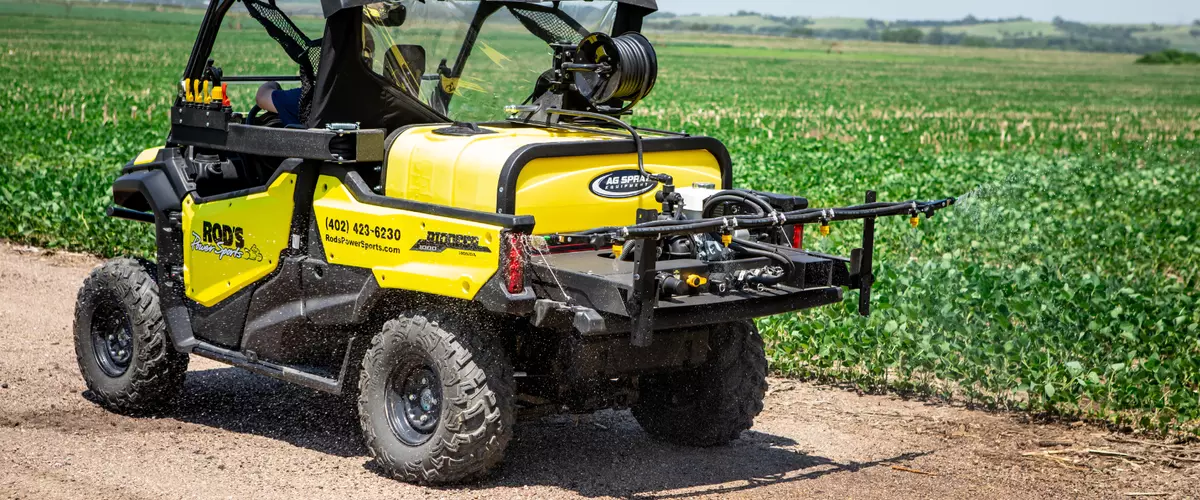
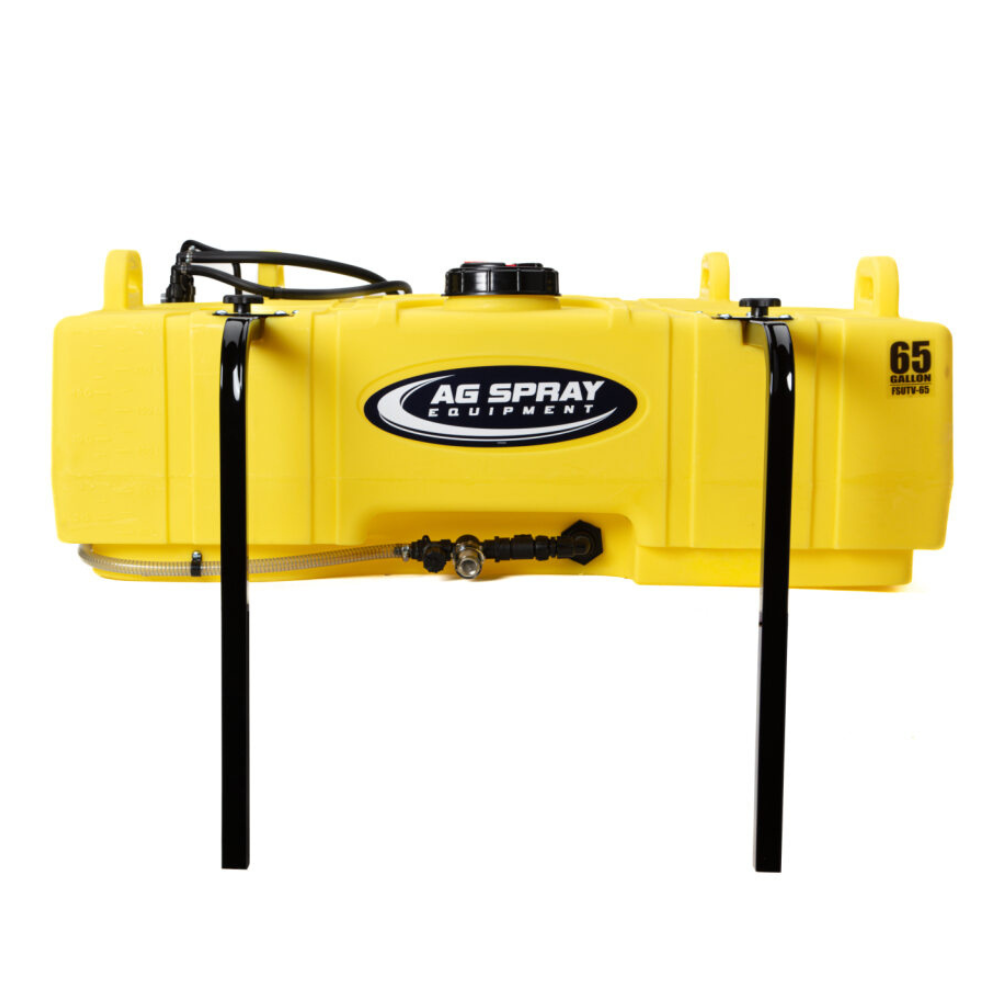
Mounted sprayers sit on a tractor or utility vehicle. They’re often smaller than tow-behind rigs and are good for targeted work.
Best for:
- medium fields
- precise row or perimeter spraying
- reducing overspray and waste
Pros
- Faster coverage than handheld
- Adjustable pressure and patterns
- Efficient for controlled applications
Cons
- Less nimble in tight areas
- Requires maintenance and cleaning
- Setup cost may be higher for small farms
3) 3-Point (Tractor Hitch) Sprayers
These connect to a tractor’s three-point hitch, sometimes using PTO power for strong, consistent pressure.
Best for:
- bigger acreage
- long, uninterrupted field passes
- consistent boom spraying
Pros
- Covers wide areas quickly
- Reliable tractor-mounted stability
- Multiple power options depending on model
Cons
- Must match your hitch category
- Not ideal for spot spraying
- Wider frames struggle in tight spaces
4) Spot Sprayers
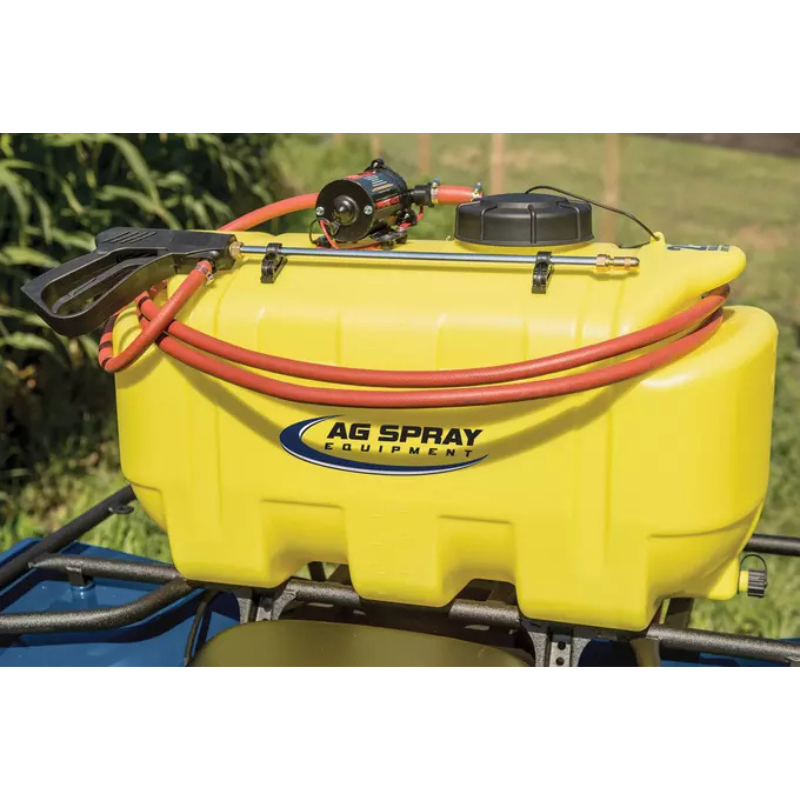
Spot sprayers are smaller tanks with a wand or small boom for precision.
Best for:
- weeds in pockets
- fence-line treatment
- targeted pest or disease control
Pros
- Uses less product
- Lightweight and portable
- Prevents damage to nearby healthy plants
Cons
- Too slow for large acreage
- Small tanks need frequent refills
- Limited spray width
Lawn and Garden Sprayers: Made for Home and Light Commercial Use
Lawn and garden sprayers handle smaller-scale tasks like weed control, pest treatment, and liquid fertilizer across residential properties and small landscapes.
Common Types of Lawn & Garden Sprayers
1) Tow-Behind Lawn Sprayers
These tow behind lawn mowers, ATVs, or UTVs and are ideal for larger yards.
Best for:
- large lawns
- broad weed or pest control
- occasional acreage-light projects
Pros
- Faster than handheld
- Can spot spray or broadcast
- Good capacity for bigger yards
Cons
- Needs a compatible hitch
- Not great in narrow spaces
2) Handheld Sprayers
Simple, freestanding tanks carried by hand.
Best for:
- gardens
- driveways and walkways
- flower beds and small lawns
Pros
- Affordable and easy to store
- No vehicle needed
- Great for precision work
Cons
- Small capacity = more refills
- Carrying weight can add up
- Not suited for big areas
3) Backpack Sprayers
Worn like a backpack for hands-free portability and longer spraying sessions.
Best for:
- small-to-medium lawns
- fence lines
- slope or wooded access areas
Pros
- Comfortable weight distribution
- Larger tanks than handhelds
- Battery, pump, or gas options depending on model
Cons
- Not for wide broadcast coverage
- Still limited by what you can carry
4) ATV/UTV Sprayers
Mount or tow compact sprayer systems on recreational vehicles for expanded yard coverage.
Best for:
- large lots
- trails and perimeter spraying
- semi-rural properties
Pros
- Covers more ground than backpack/handheld
- Higher capacity tanks
- Less refilling and faster work
Cons
- Extra load affects handling
- Higher cost for occasional use
- More maintenance than simple sprayers
How to Choose the Right Sprayer
Ask yourself these three questions:
- How much area are you spraying?
- Under 1 acre: handheld or backpack
- 1–5 acres: ATV/UTV or tow-behind lawn model
- 5+ acres: agricultural tow-behind, mounted, or 3-point
- Do you need precision or speed?
- Precision: spot sprayer, handheld, backpack
- Speed/coverage: boom tow-behind, mounted, 3-point
- What power source fits your routine?
- Manual: cheapest, best for tiny areas
- 12V battery pumps: great for most property owners
- Gas/PTO: best for steady high-volume farm use
FAQ Section
What sprayer is best for a farm?
An agricultural sprayer—tow-behind, mounted, or 3-point—depending on acreage and tractor/UTV setup.
Can I use a lawn sprayer for pasture weeds?
Only for small areas. For full pastures or fields, an agricultural boom sprayer is far more efficient.
What’s the best sprayer for spot treating weeds?
A spot sprayer, handheld sprayer, or backpack sprayer, depending on how far you’ll walk.
How large of a tank do I need?
Choose the largest tank you can comfortably operate without sacrificing safety or maneuverability. Bigger acreage = bigger tank.
Shop Ag Spray Sprayers at Agzaga.com
Ag Spray Sprayers are popular because they’re reliable, straightforward to maintain, and available in sizes for everything from gardens to large acreage. Browse Ag Spray Sprayers at Agzaga.com to find tow-behind, ATV/UTV, 3-point, and spot sprayer options that match your land and workload.


