


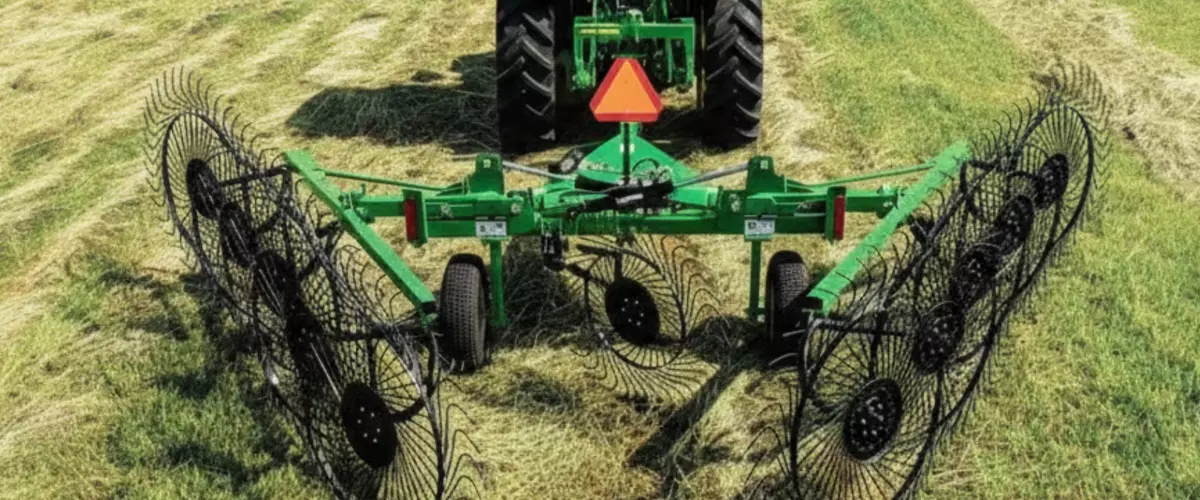


If you’ve ever shopped for replacement rake wheels, you’ve probably noticed that most options fall into two main sizes. So, what size are rake wheels? In the hay industry, the most common rake wheel sizes are 55 inches and 60 inches in diameter—and understanding the difference between the two can help you choose the best option for your operation.
The Most Common Rake Wheel Sizes
Rake wheels are typically measured by their overall diameter (not including the teeth), and across most major brands and manufacturers, two sizes dominate the market:
- 55-inch rake wheels
- 60-inch rake wheels
These sizes are widely used across wheel rakes from brands like Vermeer, Sitrex, H&S, and John Deere. In fact, many modern rake systems are designed to run either 55” standard wheels or upgraded 60” options depending on performance needs. ()
Why 55” Rake Wheels Are So Popular
The 55” rake wheel is considered the industry standard for a reason. It comes factory-installed on many wheel rakes and is designed to provide a strong balance between performance, durability, and compatibility.
These wheels are:
- Ideal for most hay conditions
- Compatible with a wide range of rake brands
- Easier to handle and replace
Many OEM rake systems are built around 55” wheels, making them the go-to choice for replacement parts. ()
Agzaga’s Perfect Fit 55” rake wheels are designed with this exact compatibility in mind, offering a reliable, ready-to-install solution that works across a wide variety of equipment.
When to Choose 60” Rake Wheels
While 55” wheels are standard, 60” rake wheels are often used as an upgrade option. These larger wheels provide increased ground contact and improved performance in certain conditions.
60” rake wheels are best for:
- Rough or uneven terrain
- Heavier crop loads like thick alfalfa
- Farmers wanting more aggressive raking performance
Because of their larger diameter, 60” wheels can follow the ground more smoothly and maintain better contact, which can lead to more consistent windrows. ()
Agzaga’s Perfect Fit 60” rake wheels are built to deliver that added performance while maintaining proper fitment and durability.
What’s the Real Difference Between 55” and 60”?
At first glance, a 5-inch difference might not seem like much—but in the field, it can make a noticeable impact.
- 55” wheels = Standard performance, wide compatibility, lower cost
- 60” wheels = Better ground tracking, improved performance in tough conditions
Both sizes typically use similar tine configurations and are designed to fit major rake brands, but choosing the right size depends on your operation and field conditions.
Do All Rakes Use These Sizes?
Yes—for the most part. While there are some variations, the vast majority of wheel rakes on the market are designed to use either 55” or 60” rake wheels. ()
This standardization makes it easier for farmers to find replacement wheels without worrying about highly specialized sizing.
Why Fit and Quality Matter
Even if you choose the correct size, not all rake wheels are built the same. Poor-quality wheels can bend, wear out quickly, or fail to maintain consistent contact with the ground—leading to uneven windrows and lost productivity.
That’s why Agzaga’s Perfect Fit rake wheels stand out. Available in both 55” and 60” sizes, they are engineered for:
- Consistent fit across major rake brands
- Durable construction for long field life
- Reliable performance in real-world hay conditions
Agzaga offers multiple sets and configurations in both sizes, ensuring you can match your rake setup exactly without guesswork. ()
Final Thoughts: What Size Are Rake Wheels?
So, what size are rake wheels? For most farmers, the answer is simple: 55” and 60” are the industry standards.
If you’re replacing a factory wheel, 55” is likely your default. If you’re looking to improve performance—especially in rough terrain or heavy crops—60” may be worth the upgrade.
Either way, choosing a high-quality option like Agzaga’s Perfect Fit rake wheels ensures you get the right size, the right fit, and the performance you need to keep your hay operation running smoothly.


